
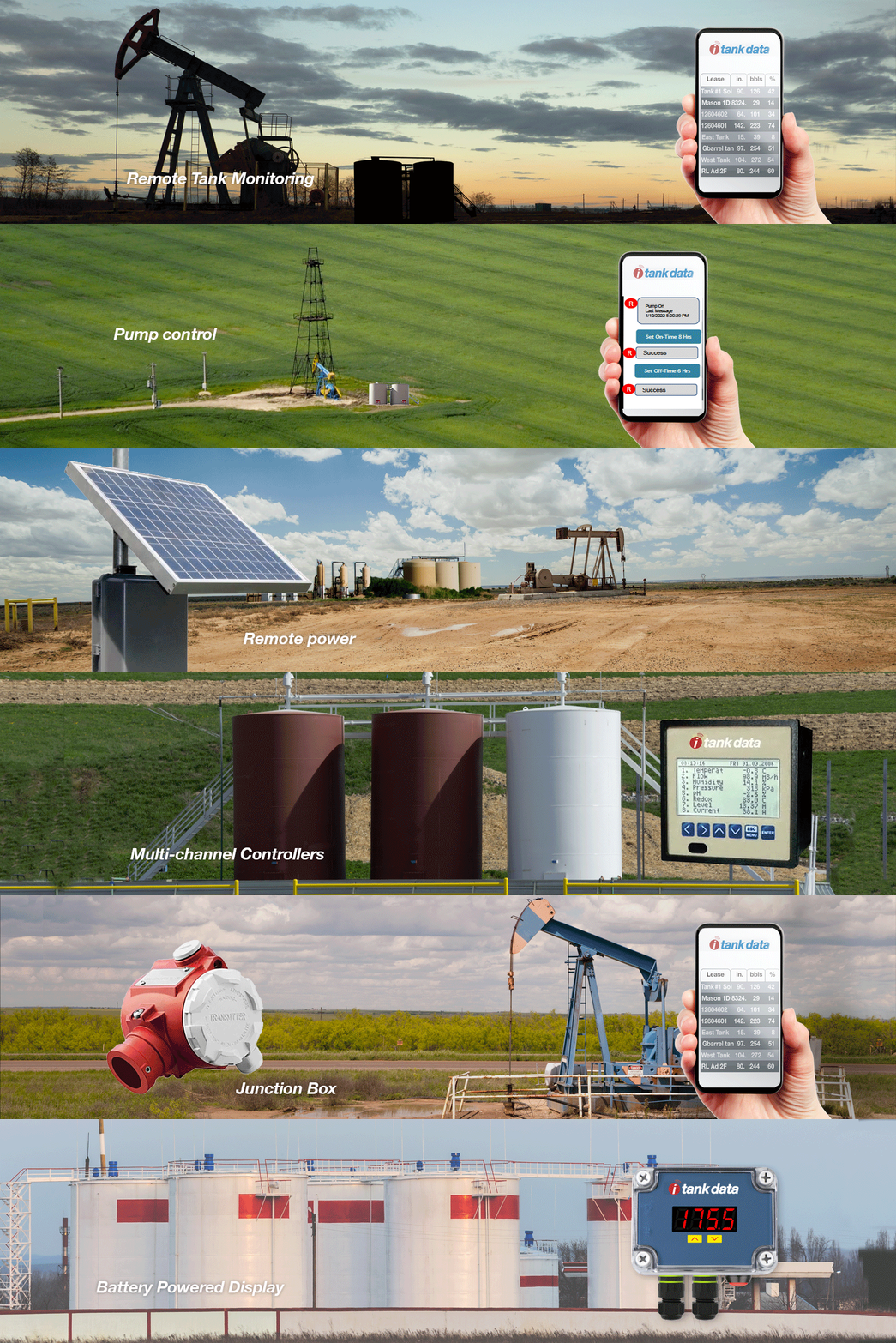
WHAT ITANKDATA IS : Core Function
1. What is iTankData and how does tank level monitoring work?
iTankData is a remote tank level monitoring and analytics system that uses connected sensors to measure fluid levels in real time. It transmits data to a cloud platform where users can view tank levels, trends, and alerts through mobile and web dashboards.
Modern AI-powered tank monitoring systems provide highly accurate real-time tank level measurements for fuel, lubricant, chemical, and oilfield storage tanks. Advanced radar, ultrasonic, and submersible hydrostatic pressure monitoring technologies can accurately monitor inventory levels, usage rates, and fluid consumption trends while reducing human error associated with manual tank inspections.
2. How does iTankData measure fluid levels in tanks remotely?
iTankData uses IoT-based sensors installed on or in tanks to measure fluid levels and convert readings into digital data. This data is transmitted wirelessly to a central platform for real-time monitoring.
3. How does tank monitoring reduce fuel delivery and operational costs?
Tank monitoring helps reduce operating expenses by eliminating unnecessary deliveries, reducing emergency dispatches, minimizing manual tank checks, and improving route optimization. Real-time inventory visibility allows fuel distributors, lubricant suppliers, and chemical service companies to improve fleet efficiency, reduce labor costs, and increase profitability. Additionally, the iTankData monitors provide GPS position. Using the iTankData mobile app, new drivers can map their way to tanks.
4. What types of tanks can iTankData monitor (oil, water, chemical, diesel)?
iTankData can monitor a wide range of storage tanks including crude oil, produced water, freshwater, chemicals, and diesel fuel tanks across industrial and field environments. Modern remote tank monitoring systems can monitor virtually any type of tank, including steel tanks, poly tanks, frac tanks, vertical tanks, horizontal tanks, ISO tanks, totes and bulk storage containers. Common applications include fuel tanks, production chemical tanks, DEF tanks, lubricant tanks, wastewater tanks, diesel storage, crude oil storage, and industrial fluid containment.
5. How accurate is iTankData’s tank level measurement system?
iTankData provides high-accuracy digital level readings designed for operational decision-making, with precision dependent on sensor type, tank configuration, and installation conditions.
6. Does iTankData work with both above-ground and underground tanks?
Yes, iTankData is designed to support both above-ground and underground tank systems depending on sensor configuration and site requirements.
7. What makes iTankData different from traditional tank gauging systems?
Unlike manual gauging or legacy systems, iTankData provides real-time digital data, remote access, mobile alerts, and AI-driven analytics for predictive decision-making.
8. How does tank monitoring improve customer transparency and client retention?
Tank monitoring platforms provide customers with real-time access to inventory levels, delivery history, consumption trends, and operational data through mobile apps and web dashboards. This level of transparency improves customer communication, strengthens client relationships, increases trust, and supports long-term customer retention.
BEST PRACTICES + APPLICATIONS
1. Can tank monitoring improve delivery route optimization?
Yes. Real-time tank monitoring data allows dispatchers and logistics teams to schedule deliveries based on actual inventory usage instead of fixed schedules or manual estimates. This improves route planning, reduces partially filled deliveries, increases truck utilization, and lowers transportation costs.
2. Does tank monitoring work in remote oilfield and industrial locations?
Yes. Industrial IoT tank monitoring systems can operate in remote oilfield, agricultural, mining, and industrial environments using cellular, satellite, or hybrid communication technologies. Satellite-enabled tank monitoring is especially valuable in areas without reliable cellular coverage.
3. How quickly can companies see ROI from tank monitoring technology?
Many companies begin seeing measurable ROI within the first few months through reduced labor costs, improved inventory control, fewer emergency deliveries, and optimized delivery scheduling. Companies with multiple locations, high delivery frequency, or large field operations often experience faster returns on investment.
4. Can AI tank monitoring help prevent run-outs and inventory shortages?
Absolutely. AI-driven tank monitoring platforms use predictive analytics and machine learning to identify low inventory conditions, abnormal usage patterns, and potential run-out risks before they occur. Automated alerts and forecasting tools help operations teams proactively schedule deliveries and maintain uninterrupted supply. Quick review of AI-identified tanks, easily done on the iTankData mobile app dashboard – no need to scan through hundreds of tanks to identify issues.
MOBILE + CONNECTIVITY
7. How does iTankData send tank level data to a mobile phone?
Tank data is transmitted through wireless networks to a cloud platform, where it is displayed instantly on mobile apps or browser dashboards.
8. Does iTankData require cellular, WiFi, or satellite connectivity?
iTankData can operate using cellular, WiFi, or satellite connectivity depending on site conditions and remote location requirements.
9. Can I monitor multiple tanks from a single mobile dashboard?
Yes, users can monitor unlimited tanks across multiple locations from a single centralized mobile or web dashboard.
10. Does iTankData work in remote oilfield locations with poor signal?
Yes, iTankData is designed for remote field environments and can utilize cellular boosters or satellite connectivity where standard signal coverage is limited.
11. How often does iTankData update tank level readings?
Update frequency is configurable and can range from near real-time updates to scheduled intervals depending on operational needs.
AI + ANALYTICS
12. How does iTankData use AI to analyze tank levels and usage patterns?
iTankData uses AI-driven analytics to evaluate historical tank data, detect usage trends, and identify anomalies in fluid movement and consumption. Artificial intelligence and machine learning improve tank monitoring by analyzing historical usage patterns, identifying inefficient delivery schedules, detecting abnormal tank activity, and predicting future inventory needs. AI-powered dashboards can also help identify problem tanks, reduce operational inefficiencies, and improve decision-making across large installations.
13. Can iTankData predict when a tank will need refilling?
Yes, iTankData can forecast refill timing based on historical consumption rates and current depletion trends.
14. Does iTankData recommend actions based on tank data?
Yes, the system generates AI-driven insights and operational recommendations such as refill timing, anomaly alerts, and efficiency suggestions.
15. How does the AI decide when to alert for low or high tank levels?
Alerts are triggered using predefined thresholds combined with AI pattern recognition that identifies abnormal deviations or rapid level changes.
16. Can iTankData detect leaks or abnormal usage trends?
Yes, the system can flag unexpected drops or irregular consumption patterns that may indicate leaks or operational issues.
ALERTS + AUTOMATION
17. What types of alerts does iTankData send?
iTankData sends alerts for low tank levels, high/overflow conditions, abnormal usage patterns, and system connectivity issues.
18. Can I customize alert thresholds for different tanks?
Yes, each tank can have individually configured alert thresholds based on operational requirements.
19. Does iTankData support automated reporting and notifications?
Yes, the system automatically generates reports and sends scheduled or event-driven notifications to users.
20. Can alerts be sent via SMS, email, and mobile app?
Yes, alerts can be delivered through SMS, email, and mobile app notifications depending on user preferences.
REPORTING + ANALYTICS
21. What kind of reports does iTankData generate?
iTankData generates reports on tank levels, usage history, consumption rates, refill cycles, and anomaly detection insights.
22. Can iTankData export tank data into spreadsheets or PDF reports?
Yes, users can export tank data into Excel, CSV, or PDF formats for analysis and reporting.
23. How does iTankData help with inventory tracking?
It provides real-time visibility into inventory levels, helping operators track fluid volumes across multiple tanks and locations.
24. Can iTankData track historical tank levels over time?
Yes, all tank data is stored historically, allowing users to analyze trends and usage over time.
25. Does iTankData integrate with accounting or ERP systems?
Yes, iTankData can integrate with ERP and accounting systems through APIs or data export functions.
INSTALLATION + OPERATIONS
26. How is iTankData installed on existing tanks?
iTankData is installed by attaching compatible sensors and configuring connectivity to the cloud platform without requiring major tank modifications.
27. How long does installation take?
Most installations can be completed quickly depending on tank type, sensor configuration, and site conditions.
28. Does iTankData require tank modification or welding?
No major tank modifications or welding are typically required, as most sensors are non-invasive or externally mounted.
29. What maintenance is required?
iTankData systems require minimal maintenance, primarily periodic sensor checks and connectivity verification. Most modern radar-based tank monitoring systems require very little maintenance compared to older float-based or manual monitoring methods. Many systems allow remote diagnostics, software updates, and troubleshooting, reducing the need for field service calls and lowering long-term maintenance costs.
30. Can iTankData scale across hundreds of tanks?
Yes, the platform is designed to scale from a few tanks to enterprise-level deployments across hundreds or thousands of locations.


